Crime & Punishment
Review
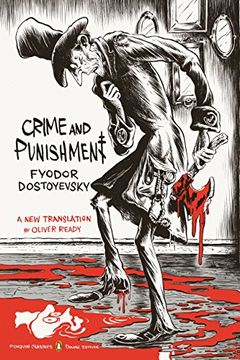
Spanish version
Crimen y Castigo
Rodion Romanovich Raskolnikov, un ex estudiante de derecho, vive en la pobreza extrema en una pequeña habitación alquilada en San Petersburgo. Aislado y antisocial, ha abandonado todos los intentos de mantenerse a sí mismo, y está
En un estado de extrema tensión nerviosa, Raskolnikov roba un hacha y se dirige una vez más al apartamento de la anciana. Él accede al lugar fingiendo que tiene algo que empeñar, y luego la ataca con el hacha, matándola. También mata a su media hermana, Lizaveta, quien casualmente se topa con la escena del crimen. Conmocionado por sus acciones, solo roba un puñado de artículos y un pequeño bolso, dejando gran parte de la riqueza de la prestamista intacta. Por pura suerte, logra escapar del edificio y regresar a su habitación sin ser detectado.
En un estado febril y semidelirante, Raskolnikov esconde los objetos robados y se queda dormido exhausto. Se alarma mucho a la mañana siguiente cuando es convocado a la estación de policía, pero resulta ser en relación con un aviso de deuda de su casera. Cuando los oficiales en la oficina comienzan a hablar sobre el asesinato, Raskolnikov se desmaya. Se recupera rápidamente, pero puede ver por sus caras que ha despertado sospechas. Temiendo una búsqueda, esconde los objetos robados debajo de una gran roca en un patio vacío, notando con humillación que ni siquiera ha comprobado cuánto dinero hay en el bolso. Sin saber por qué, visita a su viejo amigo de la universidad, Razumikhin, quien observa que Raskolnikov parece estar gravemente enfermo. Finalmente regresa a su habitación donde sucumbe a su enfermedad y cae en un prolongado delirio.
Cuando emerge varios días después, descubre que Razumikhin lo ha rastreado y lo ha estado cuidando. Todavía febril, Raskolnikov escucha nerviosamente una conversación entre Razumikhin y el médico sobre el estado de la investigación policial sobre los asesinatos: un muzhik llamado Mikolka, que trabajaba en un piso vecino en ese momento, ha sido detenido y se está entrevistando a los clientes de la anciana. Son interrumpidos por la llegada de Luzhin, el prometido de Dunya, que desea presentarse, pero Raskolnikov lo insulta deliberadamente y lo echa. Le dice enojado a los demás que se vayan también, y luego se escapa él mismo. Busca noticias sobre el asesinato, y casi parece querer llamar la atención sobre su propia participación en él. Se encuentra con el oficial de policía Zamyotov, que estaba presente cuando se desmayó en la oficina, y se burla abiertamente de las sospechas tácitas del joven. Regresa a la escena del crimen y revive las sensaciones que experimentó en ese momento. Enfurece a los obreros y cuidadores haciendo preguntas casuales sobre el asesinato, incluso sugiriendo que lo acompañen a la estación de policía para discutirlo. Mientras contempla si confesar o no, ve a Marmeladov, quien ha sido atropellado mortalmente por un carruaje. Se apresura a ayudar y logra llevar al hombre afectado de regreso al apartamento de su familia. Clamando a Sonya que lo perdone, Marmeladov muere en los brazos de su hija. Raskolnikov le da sus últimos veinticinco rublos (del dinero que le envió su madre) a la viuda tísica de Marmeladov, Katerina Ivanovna, diciendo que es el pago de una deuda con su amigo.
Sintiéndose renovado, Raskolnikov visita a Razumikh
English Version Review
Crime & Punishment
Crime and punishment Rodion Romanovich Raskolnikov, a former law student, lives in extreme poverty in a tiny, rented room in Saint Petersburg. Isolated and antisocial, he has abandoned all attempts to support himself, and is brooding obsessively on a scheme he has devised to murder and rob an elderly pawn-broker. On the pretext of pawning a watch, he visits her apartment, but remains unable to commit himself. Later in a tavern he makes the acquaintance of Semyon Zakharovich Marmeladov, a drunkard who recently squandered his family's little wealth. Marmeladov tells him about his teenage daughter, Sonya, who has become a prostitute in order to support the family. The next day Raskolnikov receives a letter from his mother in which she describes the problems of his sister Dunya, who has been working as a governess, with her ill-intentioned employer, Svidrigailov. To escape her vulnerable position, and with hopes of helping her brother, Dunya has chosen to marry a wealthy suitor, Luzhin, whom they are coming to meet in Petersburg. Details in the letter suggest that Luzhin is a conceited opportunist who is seeking to take advantage of Dunya's situation. Raskolnikov is enraged at his sister's sacrifice, feeling it is the same as what Sonya felt compelled to do. Painfully aware of his own poverty and impotence, his thoughts return to his idea. A further series of internal and external events seem to conspire to compel him toward the resolution to enact it. In a state of extreme nervous tension, Raskolnikov steals an axe and makes his way once more to the old woman's apartment. He gains access by pretending he has something to pawn, and then attacks her with the axe, killing her. He also kills her half-sister, Lizaveta, who happens to stumble upon the scene of the crime. Shaken by his actions, he steals only a handful of items and a small purse, leaving much of the pawn-broker's wealth untouched. Due to sheer good fortune, he manages to escape the building and return to his room undetected. In a feverish and semi-delirious state Raskolnikov conceals the stolen items and falls asleep exhausted. He is greatly alarmed the next morning when he gets summoned to the police station, but it turns out to be in relation to a debt notice from his landlady. When the officers at the bureau begin talking about the murder, Raskolnikov faints. He quickly recovers, but he can see from their faces that he has aroused suspicion. Fearing a search, he hides the stolen items under a large rock in an empty yard, noticing in humiliation that he hasn't even checked how much money is in the purse. Without knowing why, he visits his old university friend Razumikhin, who observes that Raskolnikov seems to be seriously ill. Finally he returns to his room where he succumbs to his illness and falls into a prolonged delirium. When he emerges several days later he finds that Razumikhin has tracked him down and has been nursing him. Still feverish, Raskolnikov listens nervously to a conversation between Razumikhin and the doctor about the status of the police investigation into the murders: a muzhik called Mikolka, who was working in a neighbouring flat at the time, has been detained, and the old woman's clients are being interviewed. They are interrupted by the arrival of Luzhin, Dunya's fiancé, who wishes to introduce himself, but Raskolnikov deliberately insults him and kicks him out. He angrily tells the others to leave as well, and then sneaks out himself. He looks for news about the murder, and seems almost to want to draw attention to his own part in it. He encounters the police official Zamyotov, who was present when he fainted in the bureau, and openly mocks the young man's unspoken suspicions. He returns to the scene of the crime and re-lives the sensations he experienced at the time. He angers the workmen and caretakers by asking casual questions about the murder, even suggesting that they accompany him to the police station to discuss it. As he contemplates whether or not to confess, he sees Marmeladov, who has been struck mortally by a carriage. He rushes to help and succeeds in conveying the stricken man back to his family's apartment. Calling out for Sonya to forgive him, Marmeladov dies in his daughter's arms. Raskolnikov gives his last twenty five roubles (from money sent to him by his mother) to Marmeladov's consumptive widow, Katerina Ivanovna, saying it is the repayment of a debt to his friend. Feeling renewed, Raskolnikov calls on Razumikhin, and they go back together to Raskolnikov's building. Upon entering his room Raskolnikov is deeply shocked to see his mother and sister sitting on the sofa. They have just arrived in Petersburg and are ecstatic to see him, but Raskolnikov is unable to speak, and collapses in a faint.

Comentarios
Publicar un comentario